Ines Werner · 2 October 2026
Scotland's Renewable Push Sparks Fresh Debates Over Land Use Conflicts in Remote Areas
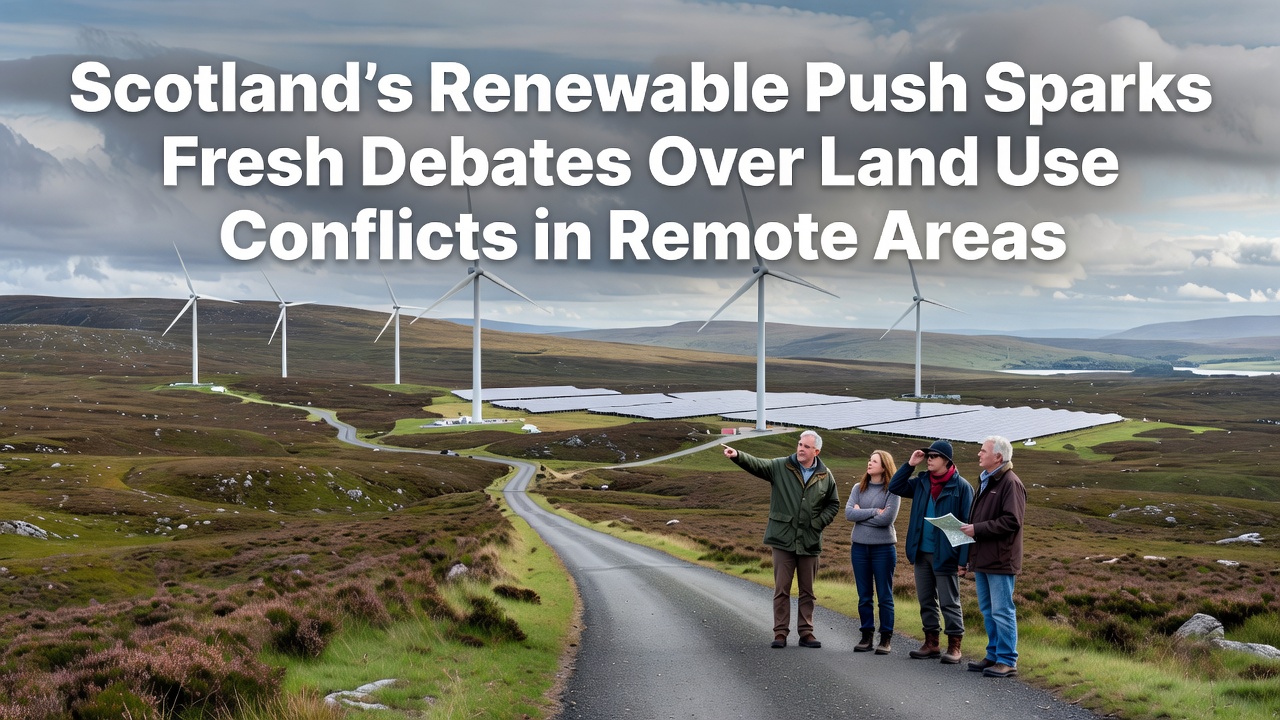
Scotland continues to expand its renewable energy capacity through large-scale onshore wind projects, and these developments have prompted renewed discussions about how land gets allocated in sparsely populated regions. Government records show that onshore wind supplied over 60 percent of Scotland's electricity generation in recent years, with further installations planned across the Highlands and islands. Data from the Scottish Government indicates that planning applications for new turbines increased notably between 2023 and 2025, and observers note that many proposals target peat-rich moorlands and crofting estates where traditional land uses already exist.
Remote communities in areas such as the Western Isles and Sutherland have seen multiple proposals for wind farms that require access roads, turbine foundations, and grid connections. These projects often intersect with land managed under crofting law, which gives local residents rights to graze livestock and cultivate small plots. Researchers at the James Hutton Institute have documented cases where turbine placements altered drainage patterns and affected grazing quality, while project developers cite environmental impact assessments that aim to minimize such effects through careful siting and habitat restoration measures.
Policy Targets and Project Pipeline
Scotland set a target of 20 gigawatts of renewable electricity capacity by 2030, and onshore wind forms a major part of that goal. Official statistics released in 2025 recorded 12.4 gigawatts already operational or under construction, and additional schemes submitted in late 2025 pushed the pipeline higher. In October 2026 the Scottish Government published updated guidance on peatland protection that requires developers to demonstrate how projects will avoid or offset carbon releases from disturbed soils, and this document has become a key reference point in current planning debates.
One project in the Flow Country region illustrates the tensions. The proposed wind farm would occupy land designated as a tentative UNESCO World Heritage site for its blanket bog habitat. Planning documents submitted to the Highland Council show that the developer offered to fund peat restoration on adjacent estates, yet local groups argued that the scale of construction traffic and permanent infrastructure would still fragment sensitive areas. Similar patterns appear in applications on the Isle of Lewis, where multiple schemes compete for limited grid capacity and where crofters have raised concerns about long-term access to common grazings.
Community Responses and Consultation Processes
Public consultations for these developments reveal divided opinions within the same communities. Some residents welcome the prospect of community benefit payments that can reach several hundred thousand pounds annually per project, and these funds have supported local infrastructure upgrades in previous cases. Others highlight the visual impact on open landscapes and the potential loss of tourism revenue tied to scenic views and wildlife watching. A 2025 survey by Highlands and Islands Enterprise found that 48 percent of respondents in affected postcodes supported further wind development while 37 percent expressed reservations about additional turbines on currently undeveloped land.
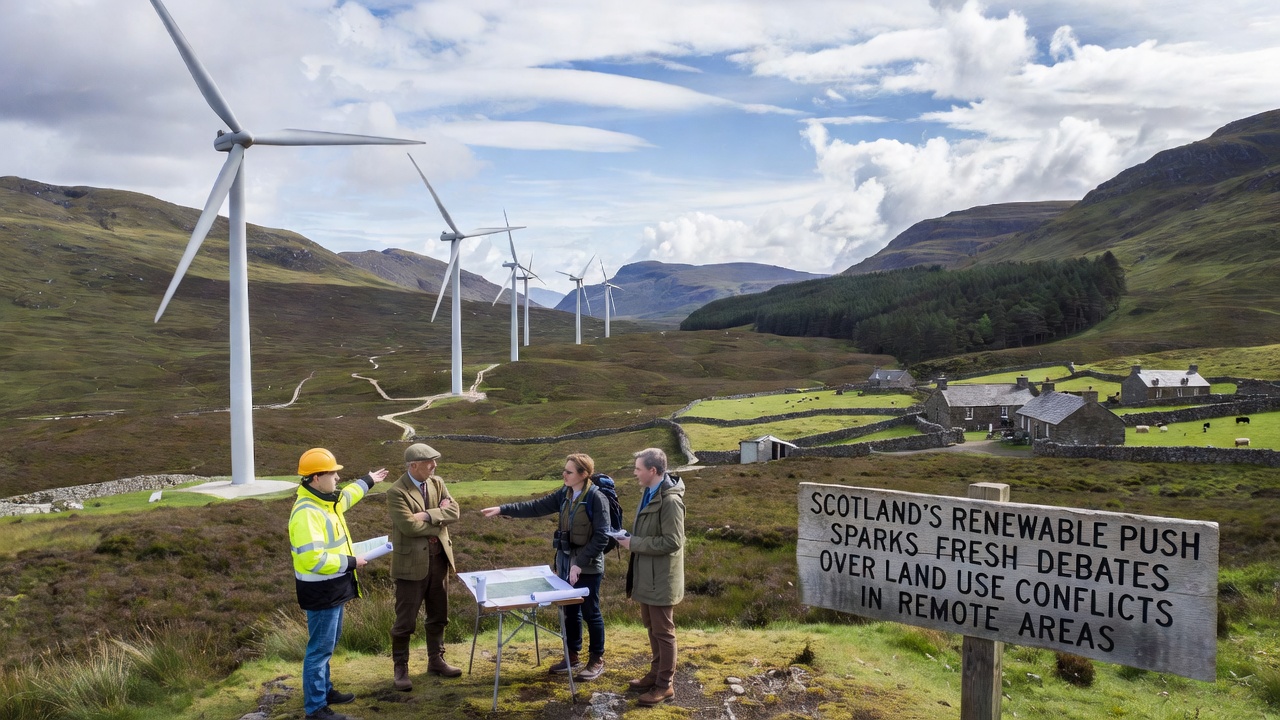
Legal challenges have also emerged. In 2024 a judicial review brought by a coalition of crofters and conservation bodies questioned whether the planning authority had properly weighed cumulative landscape effects before approving a cluster of turbines near a national scenic area. The court ultimately upheld the consent, yet the case prompted the government to issue supplementary planning advice on assessing multiple developments together. Observers note that such reviews extend project timelines and increase costs for developers, while communities gain additional opportunities to present evidence during the process.
Economic and Environmental Data
Economic analyses published by the Scottish Renewables trade body estimate that the onshore wind sector supported more than 7,500 jobs in 2025, with a significant share located in rural supply chains. At the same time, independent research from the University of Aberdeen quantified carbon emissions associated with peat disturbance during construction, and the findings prompted several developers to adopt floating turbine foundations on deeper peat areas to reduce excavation volumes. These technical adjustments appear in recent applications submitted after October 2026.
International comparisons provide additional context. Reports from the International Renewable Energy Agency have examined land use efficiency across European wind projects, and Scotland's figures show higher turbine density per square kilometre than many continental counterparts because of planning constraints that concentrate developments in certain zones. Canadian studies on similar boreal peatlands have informed mitigation techniques now referenced in Scottish environmental statements, illustrating how knowledge transfers across regions influence project design.
Conclusion
Current planning records and monitoring data indicate that Scotland's renewable expansion will continue to intersect with land use questions in remote areas through the remainder of the decade. Updated peatland guidance, community benefit arrangements, and ongoing judicial reviews shape how individual schemes proceed, while broader targets for net-zero emissions remain in place. The interplay between these elements continues to generate discussion among developers, landowners, and residents as new applications enter the system.